Best Paint for Kitchen Cabinets: A Dallas Homeowner's Guide (Products, Sheen & Prep)
Published September 21, 2026
The best paint for kitchen cabinets in Dallas: waterborne alkyd vs. catalyzed lacquer, the right primer, and the sheen that holds up in a North Texas kitchen.
Search "best paint for kitchen cabinets" and you get a ranked list of cans, as if the paint alone decides the outcome. After spraying Dallas cabinets since 1992, we can tell you the honest version: there is no single best cabinet paint. The right product depends on one question almost no other guide asks first, which is whether the finish is getting sprayed or brushed. That one fact reorders the entire list. A coating that is the best possible choice for a controlled spray booth can be the wrong choice in a homeowner's hands, and a paint that brushes out beautifully would be a mistake to load into a professional sprayer. This guide names the specific products we actually use, sorts them by how they get applied, and covers the primer, sheen, and prep that decide whether painted cabinets still look new in a North Texas kitchen five years from now.
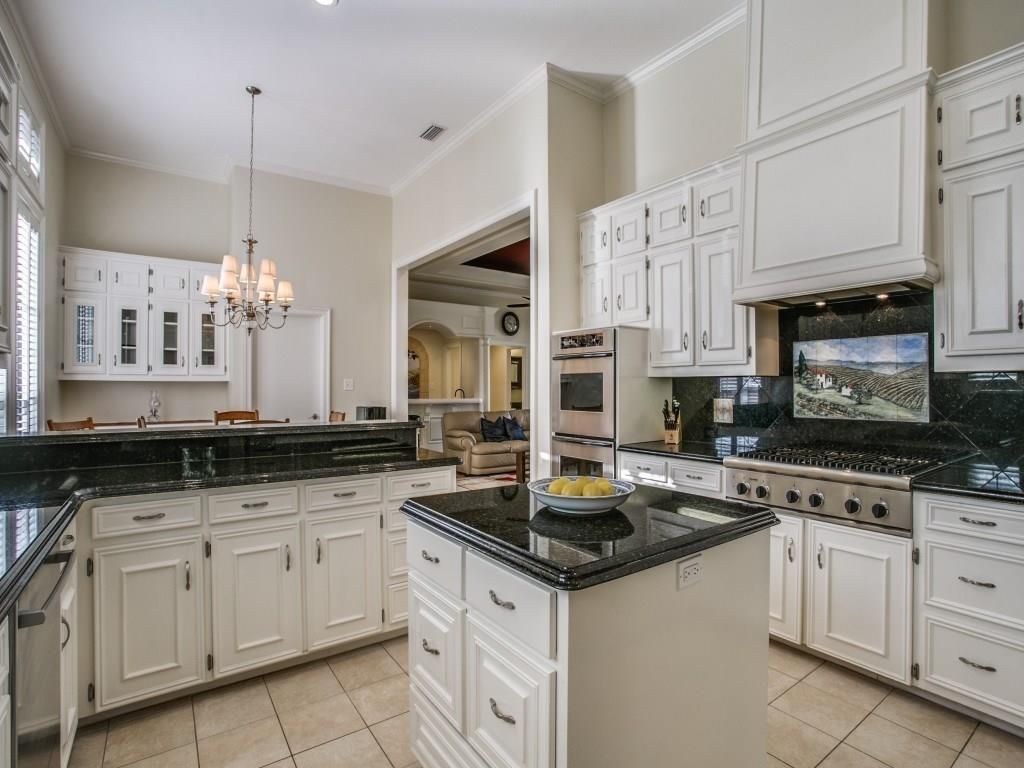
!Dallas kitchen cabinets prepped and repainted with a smooth sprayed finish
Best paint for kitchen cabinets: the honest short list
The best cabinet paint is a hard, cabinet-rated enamel matched to how you are applying it, not a single winning can. For a sprayed, furniture-grade finish, the strongest options are ML Campbell Magnacure catalyzed lacquer and Sherwin-Williams Emerald Urethane Trim Enamel. For a brushed DIY finish, the self-leveling choice is Benjamin Moore Advance Alkyd. Those three cover almost every real kitchen. Here is how they actually sort out:
- ML Campbell Magnacure catalyzed lacquer. The hardest, most durable finish of the three, and the one that behaves most like factory cabinetry. It has to be sprayed in a controlled environment, so it is a professional-only product, not something to attempt in a garage.
- Sherwin-Williams Emerald Urethane Trim Enamel. A cabinet-rated waterborne alkyd that sprays to a smooth, hard film and cures harder than ordinary trim paint, so doors do not stick to frames. It is our workhorse sprayed enamel.
- Benjamin Moore Advance Alkyd. A self-leveling waterborne alkyd built for trim and cabinets. It is the best brushable option because it flows out and softens brush marks as it levels, which is exactly what a DIYer needs.
The paint is not the variable that most often ruins a cabinet job. The mismatch between the paint and the way it gets applied is. Pick the coating that fits your method, not the one at the top of someone else's list.
If you would rather hand the whole thing to a crew that sprays it, that is what our professional cabinet painting and refinishing in Dallas is built around, sprayed enamels and all.
Waterborne alkyd vs. catalyzed lacquer for cabinets
The two finishes at the top of the sprayed list, waterborne alkyd and catalyzed lacquer, are not interchangeable, and the choice comes down to durability versus flexibility. Catalyzed lacquer, such as ML Campbell Magnacure, cures to the hardest and most chemical-resistant film, which is why it is the standard for factory and high-end cabinetry. Waterborne alkyd, such as Sherwin-Williams Emerald Urethane Trim Enamel, cures nearly as hard with easier handling, lower odor, and simpler recoat windows.
The reason this distinction matters more in North Texas than in a lot of markets is the cure environment. Both finishes cure best inside a controlled band of temperature and humidity, and our summers swing hard on both. A catalyzed lacquer sprayed in a dust-free, climate-controlled space will out-harden anything, but that same chemistry punishes a humid, uncontrolled garage far more than a forgiving latex ever would. That is a big part of why our finish coats go to a controlled spray environment rather than a driveway.
Catalyzed lacquer is the harder finish. Waterborne alkyd is the more forgiving one. Both are excellent, and both are the wrong call to spray in an un-conditioned Dallas garage in July.
Either way, the coating only performs if the surface under it was prepared correctly, which is the part homeowners most often shortchange. Weighing whether to paint the boxes at all? Our guide to whether to repaint, refinish, or replace your cabinets walks through judging the boxes before you buy a drop of paint.
Primer: the product that decides whether any of it holds
The best cabinet enamel in the world fails if it is sitting on the wrong primer, so this is not the place to save a step. On factory-sealed and previously stained cabinets, the surface is slick and sealed, and ordinary wall primer slides right off it.
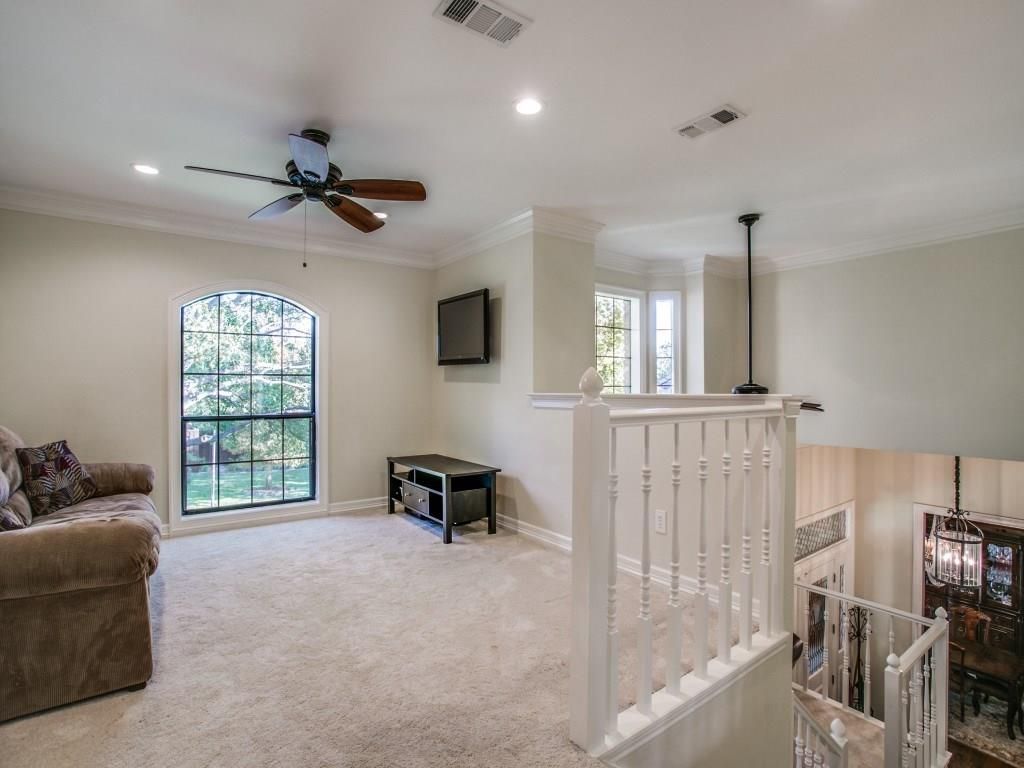
!Interior finish work in a Dallas home showing smooth, evenly coated surfaces
A few things worth knowing before you match a primer to your enamel:
- Use a shellac-based bonding primer on sealed or stained cabinets. It grips a glossy, hard-to-coat surface and locks the whole system to the wood, and on older oak it blocks the tannin bleed that would otherwise ghost through your color.
- Skip general-purpose wall primer entirely. It is built for drywall, not for slick sealed cabinetry, and it will not hold an enamel under daily kitchen use.
- Degrease first, then sand, then prime. Priming over cooking grease or an unsanded factory sheen is the number one reason DIY cabinet paint peels, no matter how good the topcoat is.
- Scuff the dried primer lightly before your first enamel coat for the smoothest possible base.
Homeowners obsess over which color and which topcoat, then grab wall primer off the same shelf. The primer is the product that decides whether the finish bonds at all. Match it to a sealed cabinet surface first.
The full prep sequence, degrease, sand to 220 grit, prime, is the same one we run and the same one a patient DIYer can do well. Want a professional to handle the parts that are hardest to get right? Get a free written estimate and we will look at your boxes, your finish, and your goals before quoting a thing.
When the best paint is not enough to make DIY the right call
Here is the part most product guides leave out, because naming the best paint is supposed to end the conversation. Buying a top-tier cabinet enamel does not make a DIY cabinet job a good idea in every kitchen. Skip the DIY route, or hand it to a pro, if any of these are true: you want a genuinely factory-smooth, sprayed finish with no brush texture, which the strongest coatings only deliver through a controlled sprayer; your kitchen is your only kitchen and you cannot lose it for the better part of a week while a hard enamel fully cures; or you are painting high-gloss, thermofoil, or laminate cabinets, which need specialized adhesion prep that punishes mistakes. On the flip side, do not overspend on catalyzed lacquer and rent spray gear for a small utility cabinet you plan to brush. A quart of Benjamin Moore Advance and a good brush is the right, honest tool for that job. There is no shame in prepping it yourself and hiring out the finish. We would rather tell you that up front than watch a good weekend of work chip in a season.
Best sheen and the prep that makes any product last
Sheen is the last product decision, and for a kitchen the answer is a satin or a soft semi-gloss, not flat and not high-gloss. A satin or low semi-gloss wipes clean of cooking splatter and fingerprints, holds up to repeated cleaning, and hides minor surface texture better than a mirror-bright gloss that shows every imperfection.
Whatever product and sheen you land on, the finish coats do the same work: two to three thin, even coats beat one thick one every time, with a light scuff-sand between coats and a full cure before you rehang doors and load dishes. A coating that feels dry in an hour can still be weeks from full hardness, and stacking plates against a soft enamel is how you get printing and chips. When the boxes are sound, a sprayed cabinet repaint is one of the highest-impact, most affordable updates you can make to a Dallas kitchen, and ours is backed by a 3-year guarantee on the work. Ready when you are: Call (214) 352-9031 and we will tell you honestly which product fits your kitchen and whether to spray it or brush it.
Frequently Asked Questions
What is the best paint for kitchen cabinets?
There is no single best cabinet paint, because the right product depends on whether the finish is being sprayed or brushed. For a sprayed, factory-grade finish, the strongest options are ML Campbell Magnacure catalyzed lacquer, the hardest and most durable of the three, and Sherwin-Williams Emerald Urethane Trim Enamel, a cabinet-rated waterborne alkyd that sprays to a smooth, hard film. Both of those need a controlled spray environment, so they are professional-grade choices rather than garage projects. For a brushed DIY finish, the best option is Benjamin Moore Advance Alkyd, a self-leveling waterborne alkyd that flows out and softens brush marks as it levels. Whichever you choose, the paint only performs over the correct primer and prep: degrease, sand to 220 grit, and prime with a shellac-based bonding primer on sealed or stained cabinets before any color goes on.
Waterborne alkyd or catalyzed lacquer for cabinets: which is better?
Both are excellent sprayed cabinet finishes, and the choice is durability versus handling. Catalyzed lacquer, such as ML Campbell Magnacure, cures to the hardest, most chemical-resistant film, which is why it is the standard for factory and high-end cabinetry. Waterborne alkyd, such as Sherwin-Williams Emerald Urethane Trim Enamel, cures nearly as hard with lower odor, easier cleanup, and friendlier recoat windows, which makes it our default on occupied-home repaints where a family is living in the house through the job. Both cure best inside a controlled band of temperature and humidity, and North Texas summers swing hard on both, so both belong in a controlled spray environment rather than an un-conditioned garage. That cure sensitivity, more than the products themselves, is why professional cabinet finishing outlasts a driveway job in Dallas.
What sheen is best for kitchen cabinets?
A satin or a soft semi-gloss is the best sheen for kitchen cabinets, not flat and not high-gloss. Satin and low semi-gloss finishes wipe clean of the cooking splatter, grease, and fingerprints that build up around a Dallas range and sink, and they hold up to repeated cleaning far better than a flat or eggshell sheen that traps grime instead of releasing it. A satin also hides minor surface texture better than a mirror-bright high-gloss, which shows every imperfection and every brush mark. If you want a little more shine and easier cleaning, step up toward semi-gloss; if you want a slightly softer look, stay at satin. Either way, the sheen only reads evenly if the finish went on in thin, even coats with a light scuff-sand between them.
Do painted cabinets hold up in a kitchen?
Yes, painted cabinets hold up in a kitchen when the product, prep, and cure are right, and they fail fast when any of the three is skipped. The finishes that last are hard, cabinet-rated enamels such as ML Campbell Magnacure catalyzed lacquer or Sherwin-Williams Emerald Urethane Trim Enamel sprayed on, or Benjamin Moore Advance Alkyd brushed on, all applied over a properly degreased, 220-grit-sanded, and shellac-bonding-primed surface. What kills a painted cabinet is not the paint being painted; it is grease under the primer, an unsanded factory sheen, or a soft, under-cured finish that gets loaded with dishes before it hardens. In North Texas, the cure environment matters especially, since humidity and heat slow the cure, which is why our finish coats go to a controlled spray environment and are backed by a 3-year guarantee.